The short answer
For most home saunas the best wood is western red cedar, thermo-aspen or thermo-spruce on the walls and ceiling, and a cool, smooth wood such as aspen, cedar or basswood for the benches. They hold no resin, stay touchable in the heat and do not warp in the steam. On the 5 x 7 ft indoor plan, cedar lining comes to $1,442, thermo-spruce $2,109 and thermo-aspen $4,190 at the prices we read.
Sauna wood does a harder job than any other paneling in a house. It sits at bathing heat for hours, gets wet and dries every session, and the benches touch bare skin. The right wood stays cool enough to sit on, has no resin to weep out, and holds its shape. This guide compares the woods you can buy for a sauna, prices the three the designer draws, and lists what to keep out of the hot room.
What makes a good sauna wood
Low density, so it stays touchable.
A light, soft wood holds less heat at its surface than a dense one, so a bench of it feels warm, not hot. That is why softwoods and light hardwoods such as aspen and alder are the usual choices.No resin.
Resin softens in the heat and weeps out of knots, and it burns on skin. Thermory, a maker of sauna wood, describes aspen, cedar and thermally modified poplar and radiata pine as woods that do not secrete resin.Stable in heat and steam.
The boards dry out to almost nothing at bathing heat and swell when you throw water. Kiln-dried tongue-and-groove sold for saunas, or thermally modified wood, which Thermory says is treated with heat and steam for stability and moisture resistance, moves less.Unfinished inside.
No paint, stain or varnish inside the hot room. The wood breathes and dries, and a finish can soften or smell in the heat.
The usual sauna woods compared
These are the woods sauna makers and suppliers sell for the inside of the hot room. The notes on each are from Thermory's sauna wood guide unless we say otherwise. The first three are the linings the planner prices.
| Wood | Where it goes | What it is like | In the designer |
|---|---|---|---|
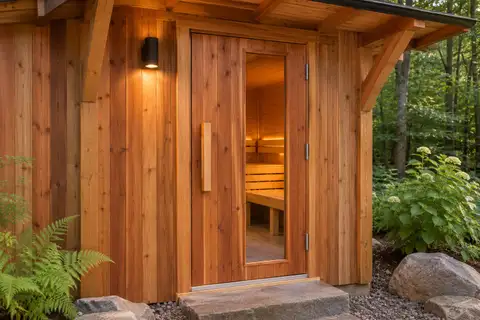
| Western red cedar | Walls, ceiling, benches | No resin, does not overheat, water repellent; reddish, with a strong aroma | Priced, the default |
| Thermo-spruce | Walls and ceiling | Spruce made stable by heat treatment; light brown | Priced |
| Thermo-aspen | Walls, ceiling, benches | No resin, no splinters, does not get too hot; light brown after treatment | Priced, with thermo-aspen benches |
| Aspen | Benches, walls | No resin, no splinters, does not get too hot; pale and smooth | Not priced |
| Hemlock | Walls and ceiling | Radiates heat evenly, durable and knot-free, a mild aroma; light buff | Not priced |
| Alder | Walls, trim, benches | Hardy, water repellent, does not overheat; reddish | Not priced |
| Basswood | Benches and trim | Pale; Superior Saunas sells it to match aspen walls | Not priced |
Cedar or hemlock is the question most people ask. Cedar is the common US choice and its aroma is part of the appeal; if the smell is too strong for you, or you want a pale room, hemlock is the usual answer. Redwood Outdoors, a sauna maker, builds with hemlock instead of cedar and notes that cedar is not native to Europe and rare in Finnish saunas. Neither is wrong. What matters more is buying clear or select tight-knot boards graded for saunas, so no loose knots fall out in the heat.
What the lining costs
The designer counts every lining board from a cutting map, then prices it at the store we read. The table runs the three linings on two of the free plans. It includes the wall and ceiling boards, the benches and the built door, which change with the wood; the rest of the materials list stays the same.
| Plan and lining | Walls and ceiling | Benches | Door | Whole plan |
|---|---|---|---|---|
| 5 x 7 ft indoor, western red cedar | $1,442 | $372 | $477 | $5,251 |
| 5 x 7 ft indoor, thermo-spruce | $2,109 | $808 | $557 | $6,358 |
| 5 x 7 ft indoor, thermo-aspen | $4,190 | $808 | $879 | $8,760 |
| 6 x 7 ft outdoor, western red cedar | $1,621 | $421 | $463 | $8,751 |
| 6 x 7 ft outdoor, thermo-spruce | $2,372 | $894 | $578 | $10,120 |
| 6 x 7 ft outdoor, thermo-aspen | $4,713 | $894 | $899 | $12,782 |
Store prices we read: 1x6 Western Red Cedar Tongue and Groove Paneling, STK grade, 2.99 USD per linear foot, 5 in cover; lumber-yard freight is quoted separately at Twin Creeks Log Home Supply (Oct 9, 2026); Thermory ThermoSpruce Wall Cladding 1x4 STS4, bundle of 6 (lengths 1.5 to 3.0 m; cover taken as the STS4 profile's 3.2 in) at The Sauna Heater (Oct 9, 2026); Thermory ThermoAspen Wall Cladding 1x4 STS4, bundle of 6 (lengths 1.5 to 3.0 m; 3.2 in net cover); freight quoted per order at The Sauna Heater (Oct 27, 2026). Freight is quoted by each store and is not included. With cedar, the benches are cedar 2x4; with either thermo lining they are thermo-aspen bench wood.
Western red cedar is the cheapest of the three at these prices. Cedar comes in long boards that cover a wall in one length. The thermo woods come in shorter bundles and narrower boards, so they take more pieces and more joints. Change the lining in the designer and the materials list, the cutting map and the total change with it.
Wood for the benches
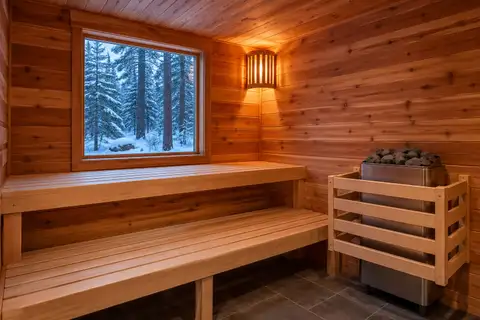
The benches are where the wood choice matters most, because you sit on them. Use a soft, smooth, knot-free wood: aspen, thermo-aspen, cedar, alder or basswood. Round the edges, leave a gap between the slats so they dry, and fix them from below with stainless screws so no metal head sits under bare skin. The framing under the seat can be ordinary kiln-dried lumber where it stays hidden, which is how the plans draw it.
Wood to keep out of the hot room
Pressure-treated lumber.
Treated wood carries preservatives made for outdoor contact, not for a hot room you breathe in. Use it only where it touches the ground outside, under the floor of an outdoor sauna.Plywood, OSB and MDF on the inside surfaces.
Glued panels are for the structure behind the lining, never the boards you see and touch.Resinous pine on the benches.
Ordinary pine weeps resin from its knots in the heat. Thermory lists Scots pine for outer walls; on the benches we use cedar or thermo-aspen.Any finish inside.
No paint, stain, varnish or ordinary oil on the walls, ceiling or benches. Leave the wood bare; outside the hot room you can finish what you like.
Safety
Fasten with stainless steel
Behind the boards, use stainless brads or nails. Superior Saunas warns that galvanized fasteners corrode and stain the wood, and the planner lists stainless brads for the same reason. The wood goes over a taped foil vapor barrier and a 3/4 in air gap: see the insulation and vapor barrier guide.
Outside the hot room
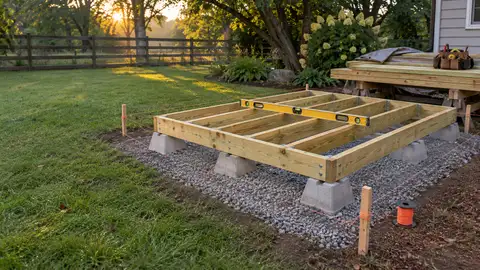
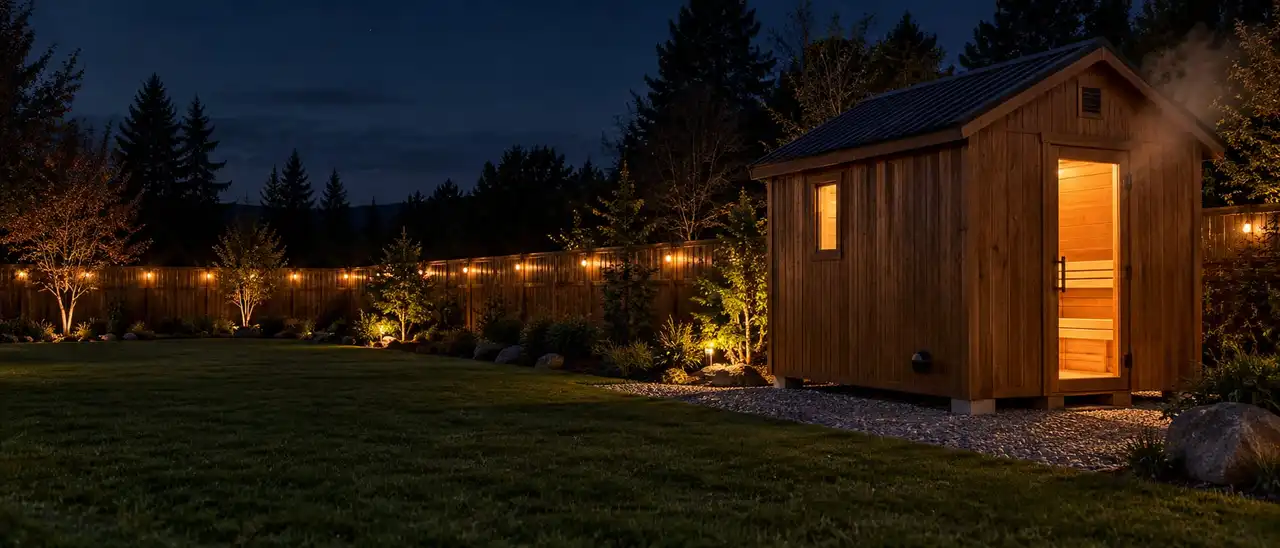
An outdoor sauna is a small cabin, and its outside wood follows the same rules as a shed: siding made for weather, a finish if you want one, and treated lumber only where the frame meets the ground. Thermory lists spruce and pine for outer walls, and cedar siding is common in the US. The outdoor sauna plans list the siding and the framing for each size.
Next: pick the lining in the designer, then size the heater for the room with the sauna heater size calculator.
Sources
Every number in this guide that does not come from our own sauna designer was checked against these 3 documents, numbered in the order the text first cites them and read on Nov 7, 2026. 3 are heater makers, codes and stores.
- 1ThermoryTen Types of Wood We Use for Saunas (April 18, 2022)
- 2Redwood OutdoorsChoosing the Right Wood for a Better Sauna
- 3Superior SaunasAspen Lumber and Paneling